What the fibre label on a VOYJOY piece is telling you
Ninety per cent nylon and ten per cent spandex is on most of the labels here, and the small number is the one that matters. What the labelling rule requires a maker to print, what a care label is legally promising, and which flammability standard everything sold as clothing in the United States has to meet.
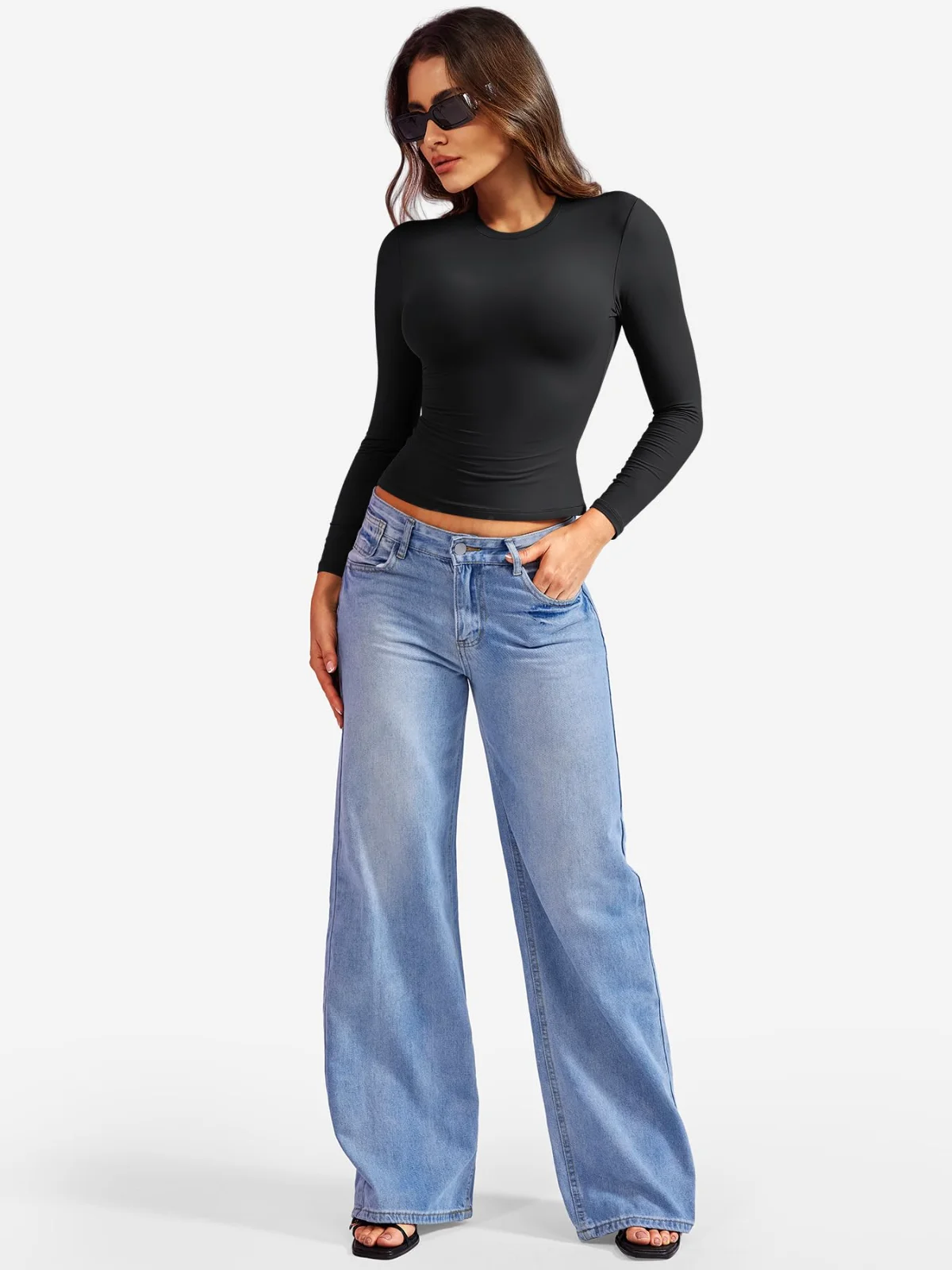
Turn a VOYJOY short inside out and there is a label at the waistband with three kinds of information on it, and none of them is there because a designer liked the look. The fibre content, the care instruction and the line that says who made or marketed the piece and where are all required by rules written in Washington, and the wording of each is closer to a legal form than to a sales pitch. That is useful, because it means the label is the one piece of text on the garment that somebody was obliged to get right.
This piece reads those three lines the way the rules read them, and then goes one step further, to a fourth rule the label does not mention at all: the flammability standard that everything sold as clothing in the United States has to meet. None of it is a claim about a VOYJOY piece. All of it is what the words on the label are promising.
Fibre content: why the small number is the one to read
The Federal Trade Commission requires a label to name each fibre by its generic name and its percentage by weight, largest first. Nylon before spandex, then, on nearly every bottom here: ninety per cent and ten. The rule lets a maker fold anything under five per cent into "other fiber", and it makes one exception that matters to activewear. A fibre under five per cent may be named "if the fiber has a definite functional significance at that amount", and the guide's own example is "96% Acetate, 4% Spandex", where the spandex provides the stretch.
That is why the small number on a VOYJOY label is the one to read. Ten per cent spandex is a fifth of what the straight wide-leg pants carry and more than some of the bras, which list seven per cent elastane, and the difference is the difference between a leg that drapes from the knee and a short that holds at the thigh. Nylon is the body of the cloth; spandex is the part that stretches and comes back.
Nylon does the wearing, spandex does the work
Nylon is smooth, it holds dye, it dries fast and it does not need an iron, and on its own it would not stretch enough to be worn close to the skin. Spandex, sold under the generic names spandex and elastane, stretches to several times its length and returns. Knit the two together and you get a cloth that holds its shape wet, goes back to size after a wash, and gives at the hip without giving up at the band.
The proportion decides the character. The wide-leg pants, at a quarter spandex, move like a trouser from the knee down because there is that much more recovery in the knit. The shorts and leggings, at a tenth, hold the way a compression garment holds. The bras sit in between. None of that is on the label as a sentence; all of it is on the label as two numbers.
What a care label is legally promising
The second line is governed by the Care Labeling Rule, and the Federal Trade Commission's guide to it is precise about what a washing instruction must contain. Five things, in this order.
| Part of the instruction | When it must appear |
|---|---|
| Hand or machine wash, and a water temperature | The temperature only if hot water would damage the piece |
| Bleach: safe, non-chlorine only, or none | Always, in one of those three forms |
| Drying method, and a temperature | The temperature only "if regular use of high temperature will harm the product" |
| Ironing, and a temperature | Only "if a product needs repeated ironing"; a temperature only if a hot setting would damage it |
| Warnings: "Do not", "No", "Only" | Against any procedure a buyer might reasonably assume is safe and is not |
Two more things the rule requires, and they are the two worth remembering. The maker must have "reliable evidence to support the care instructions": a care label is not an opinion, it is a statement somebody has to be able to back. And the label must be attached "permanently and securely" and stay "legible during the useful life of the product", which is why it is sewn into the band rather than hung on a tag you cut off. It is also why, when a page on this site and the label in your hands disagree, the label wins.
The flammability standard behind every garment
The rule the label never mentions is the oldest of the four. The Flammable Fabrics Act was passed in 1953 and expanded in 1967, and under it sits the Standard for the Flammability of Clothing Textiles, which in the Consumer Product Safety Commission's words "provides methods of testing the flammability of clothing and textiles intended to be used for clothing, establishes three classes of flammability" and names the materials unsuitable for garments. The Commission enforces it on everything sold as clothing in the United States.
What that means for a buyer is simple and easy to overstate. Every garment on this site is sold under that standard, like every garment in every shop in the country. It is a floor everything stands on, not a mark of distinction, and a card that boasted about it would be boasting about the law.
Where that standard stops, and why we call no piece exempt
The standard covers "textile fabric or related material in a form or state ready for use in an article of wearing apparel", and it exempts two kinds of fabric from testing: "plain surface fabrics, regardless of fiber content, weighing 2.6 ounces per square yard or more", and fabrics "made entirely from any of the following fibers or entirely from combination of the following fibers: acrylic, modacrylic, nylon, olefin, polyester, wool".
Nylon is on that list. Spandex is not. A knit that is ninety per cent nylon and ten per cent spandex is not made entirely of an exempt fibre, and the word in the rule is entirely. So nothing on this site calls a piece exempt, and nothing needs to: the standard applies to the garment either way, and exemption from a test is not a quality a buyer wants in a pair of shorts.
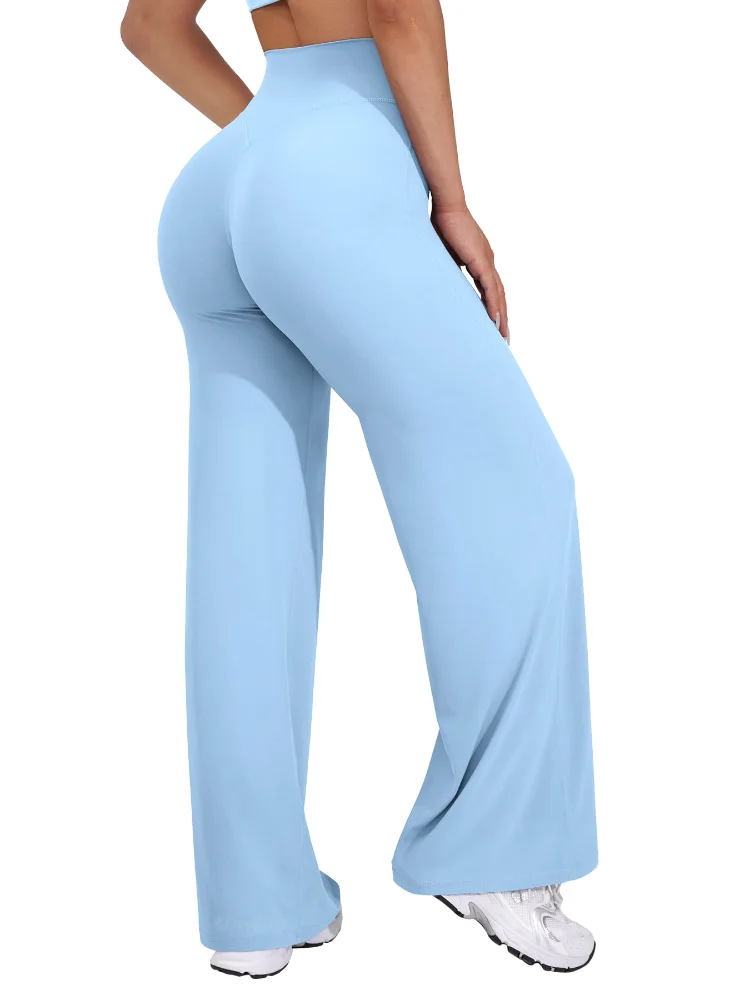
VOYJOY Straight Leggings 31.5"
The straight wide-leg pant: seventy-five per cent nylon and twenty-five per cent spandex, the highest stretch content on the site and the reason the leg drapes from the knee.
$23.19
What a label cannot tell you, and the card does
The label carries what the law requires and stops. It does not say how long the inseam is, where the band sits, which letters the cut comes in or which colours it is knitted in, and those are the four things a buyer needs before the parcel arrives. They are on the card, printed from our product data, and the fibre blend is printed there too where the data gives it.
Read the two documents for what each one is. The card is what to expect; the label is what to do. The card is ours, and it is corrected when it is wrong. The label is the maker's legal statement, and where the two disagree on how to wash a piece, the sewn one is the one to follow.
A fibre label is the one line on a garment that somebody was obliged to get right. Read the small number first.
More of this sort of thing is in Warm-Up, and the VOYJOY knit keeps the whole range one click away on the front page.
This article is general information about how clothing sold in the United States is labelled and about the flammability standard it is sold under. It is not legal advice and not a certificate for any one piece. The label sewn into a garment is the document that governs washing, and where a page here and that label disagree, the label wins.